When and How to Prune Lavender Without Turning It Woody
Lavender rarely dies of old age in the way gardeners expect. It dies of a haircut taken too late, on the wrong part of the plant, or at the wrong end of the season. A bush that was a soft grey cushion in July and looks like a bundle of dry sticks by February has almost always been left to grow outward unchecked, while the older wood in the middle faded quietly into shade. The good news is that this is one of the easiest things to get right in a herb garden, and once the timing and the cut point are clear in your head, it takes about five minutes a year.
Why Lavender Goes Woody in the Middle
Lavender is a small shrub, not a perennial that dies back and reappears from the crown every spring. It builds a permanent woody frame, and it produces new leafy shoots only from the outer few centimetres of that frame. Cut into the old brown wood and not much happens: no fresh shoots break, the stem stays bare, and the plant gradually turns into a stool with a bald centre and leaves only at the tips.
Two habits push it that way. The first is pruning too lightly, taking off just the flower spikes and leaving the foliage to extend further out each year. The second is shearing it like a box hedge into tight, flat-topped balls. Both leave the middle of the plant in permanent shade, and shaded lavender sheds its leaves.
The aim of annual pruning, then, is not to make the plant smaller for its own sake. It is to keep a young, dense layer of green growth close to the base, so there is always something to cut back to.
The Right Window Is Late Summer
Timing matters more than technique. For English lavender (Lavandula angustifolia) and lavandins (Lavandula x intermedia) in a temperate climate, the window is roughly mid-August to the first week of September, as soon as the main flush of flowers has faded. Spikes can be cut earlier if you want them for drying, but the shaping cut waits until the plant has finished blooming.
Why this window? The plant still has six to eight weeks of mild weather to push out a small tuft of new leaves from the cut stems, and that tuft is what carries it through winter. Cut in late October in a cold area and the wounds sit open, the soft regrowth gets caught by the first frost, and you can lose whole branches.
Spring is the other time people reach for the secateurs. Keep that visit light. Remove dead tips, frosted shoots and damaged stems, but leave the shape alone, because you would be cutting into the wood that is about to carry this year's flower buds. A hard spring cut also pushes soft growth at the moment the plant has least energy to spare.
In warm Mediterranean climates the calendar shifts earlier. Flowering may be over by late June or July, so the main cut happens then, and lavender often answers with a lighter second flowering in autumn.
Where to Put the Blade
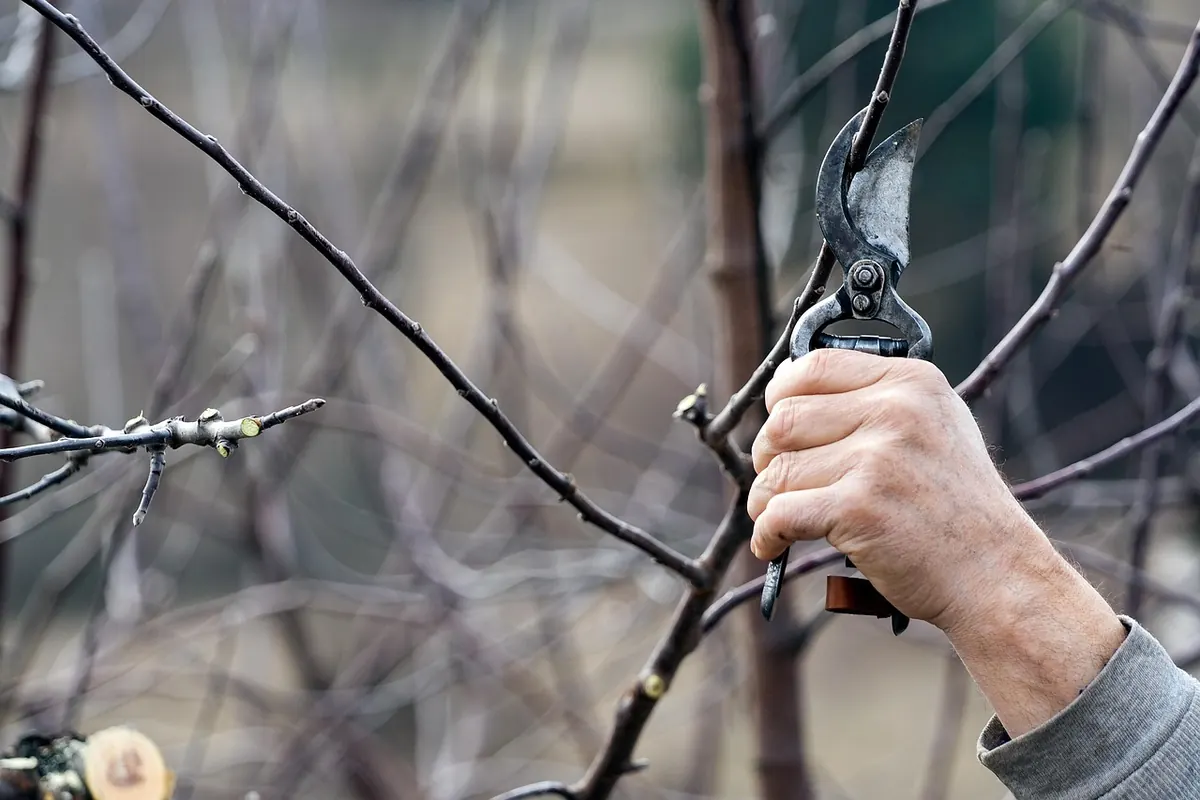
The single most useful rule: leave two to three centimetres of green growth below the cut. Any more and the plant is leggy again within a season; any less and you risk nicking the brown wood, which does not regrow reliably.
As a guide, take off about a third of the season's growth. In a good year you can take half from a strong, established plant, but never from a young or struggling one. Make each cut just above a pair of small leaves rather than in the middle of a bare stem, so the shoot has a node to break from. Sharp bypass secateurs, wiped with methylated spirit or rubbing alcohol, give a clean cut; blunt blades crush a soft stem, and crushed stems invite rot into the crown.
Then shape. Cut the plant into a low, rounded dome, slightly wider at the base than at the top, and leave the middle a touch open rather than packed tight. If you grow a lavender hedge, cut the sides with the same taper. A hedge trimmed perfectly plumb and flat on top may look sharp for a month, but the base is soon in shadow, and shadow is where lavender goes bare.
The Annual Cut, Step by Step
- Wait until most of the flower spikes have lost their colour and faded. In a cool summer that may be a fortnight later than last year, so trust the plant rather than the date.
- Cut the spent spikes first, taking them down to the top pair of leaves. This tidies the plant and lets you see the shape underneath.
- Work around the plant rather than from the top down, starting low and moving upward, so you can watch how much green you are leaving.
- Trim to a dome, keeping 2–3 cm of leafy stem on every branch. Near the centre, stop as soon as you see bare brown stems.
- Step back every few branches. It is easy to keep snipping and end up with a shaved, flat plant; a rounded outline with a slightly open centre is what you want.
- Gather the clippings as you go. Damp trimmings left piled on the crown can smother it.
Young plants need a gentler version of the same routine. In their first summer, remove only the flower spikes, so the roots can settle; the following spring, pinch out the growing tips of the main shoots to make the plant branch low down instead of shooting up on one or two stems.
Lavender in a pot follows the same calendar, but can be cut slightly harder, since container roots are restricted and the plant ages faster. Refresh the top few centimetres of compost each spring, and repot into a slightly larger pot every two or three years before the woody base fills the surface.
What to Do When the Wood Is Already Bare
Renovation works sometimes and fails often, so be honest about what you are looking at. If there are green shoots low on the old stems, there is a chance. Cut the oldest third of the stems almost to the base, leave the rest untouched, and watch for new growth. If shoots break, take another third the following year. Never cut a whole old lavender down to bare wood in one afternoon; it usually dies or limps for a season and then dies.
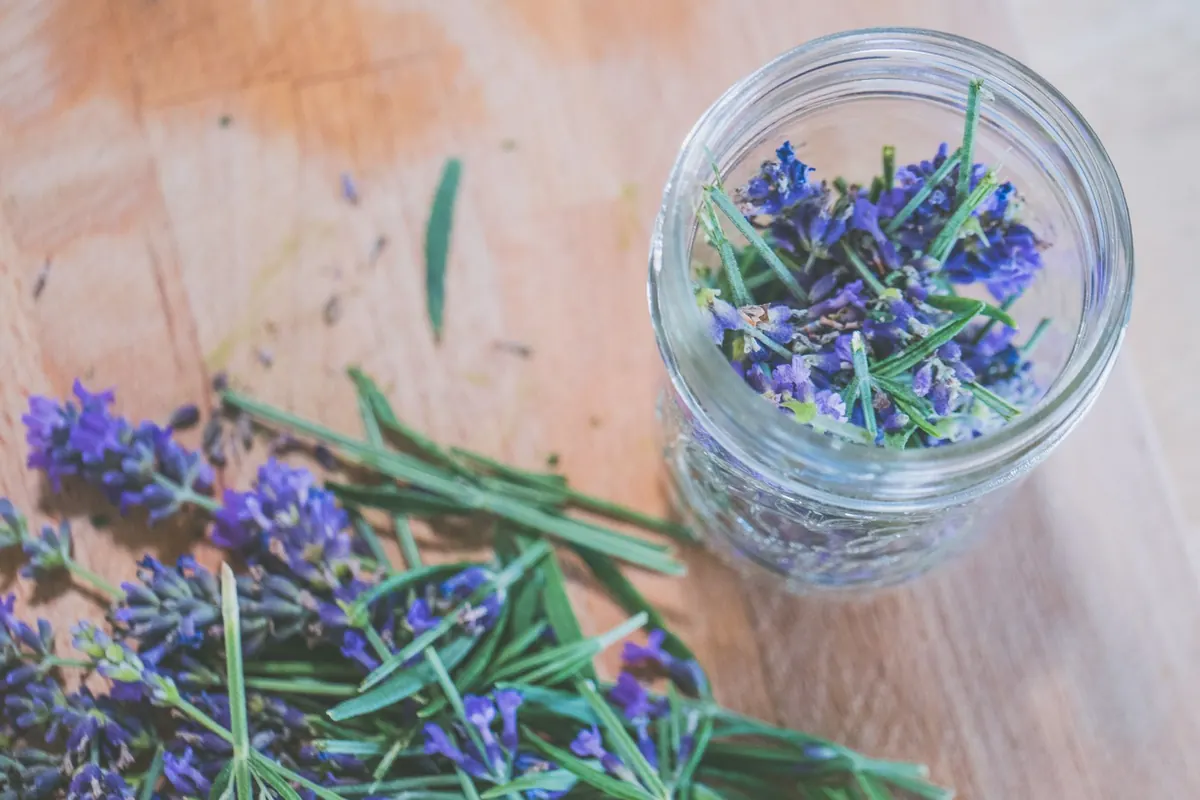
If the centre is dead and every leaf is at the tips, replacement is the better use of your time. Take cuttings in early summer as insurance: an 8–10 cm soft shoot, bottom leaves stripped, pushed into gritty compost and kept lightly humid will root without much fuss.
One more thing worth saying plainly. Pruning cannot fix a lavender in the wrong place. The plant wants sun, sharp drainage and lean soil. In rich, damp or shaded ground it grows soft, flops open and turns woody quickly, no matter how carefully you cut.
A Two-Minute Habit Worth Keeping
Three small jobs keep lavender in shape: deadhead spent spikes through the flowering season, make the shaping cut in late summer, and tidy dead tips in early spring without touching the outline. That is the whole system.
Keep your secateurs sharp and clean, cut to a dome rather than a box, and stay out of the brown wood. Do that every August for six or seven years and you will have a tight grey cushion flowering from edge to edge, with no bald middle and nothing to renovate.
Photo: aXer1 / Pixabay