Lavender Companion Plants: What to Pair and What to Avoid
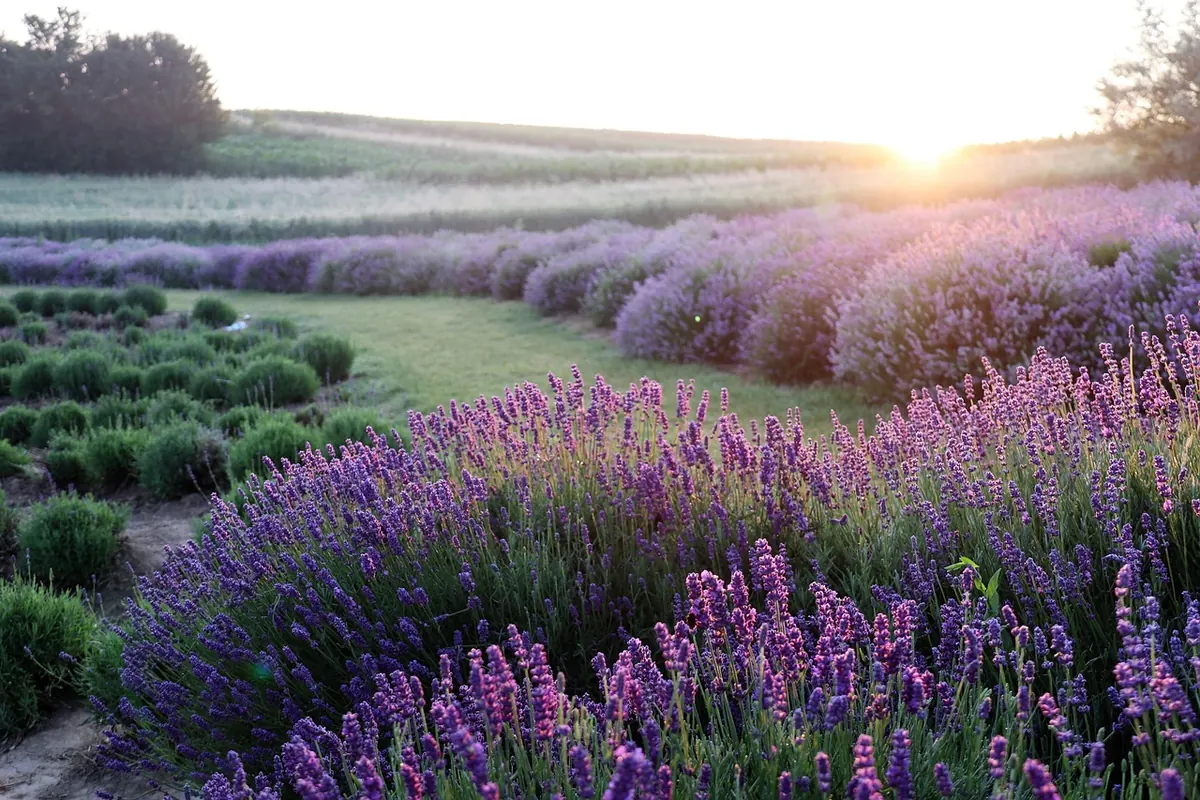
Lavender is generous with colour and scent, but it is not generous with company. Plant it among thirsty, leafy things and it sulks: leggy growth, sparse flowers, and a woody centre that dies out after a wet winter. Get the neighbours right, though, and the same plant will look better than it ever does on its own.
The rule behind every good pairing is simple. Lavender grows on dry, stony hillsides in full sun. Anything that shares those conditions will complement it. Anything that wants regular watering, rich soil or shade will compete with it and, sooner or later, win in the wrong direction.
Why Lavender Is a Demanding Neighbour
Lavender comes from the dry, rocky hills of the Mediterranean, and its roots are built for that life: fine, shallow, and quick to rot in soil that stays wet through winter. It wants full sun for at least six hours a day, thin or stony ground, and rain that drains away within hours. Give it richer soil or summer irrigation and it answers with soft, floppy growth, fewer flower spikes, and much less of the oil that makes the scent worth having.
That has two consequences for planting. Anything next to lavender must survive on the same watering schedule — which is to say, very little once established. And nothing nearby should grow tall enough to shade it or vigorous enough to swamp it. A plant doesn't have to be a bully to ruin lavender; it only has to need more water than lavender can take.
The Best Companions: Sun, Grit and Thrift
Think of the neighbours as plants that would look at home on a Greek hillside or in a gravel garden. Scent is a bonus rather than a requirement, but the herbs that share lavender's chemistry — rosemary, thyme, sage — also share its tastes.
Mediterranean herbs and sub-shrubs
Rosemary, thyme, winter savory, oregano, hyssop and sage are the natural allies. They like the same sharp drainage, they flower at overlapping times, and their leaves set off lavender's grey-green. Keep rosemary behind or beside lavender rather than in front, since it can reach a metre or more and will shade a low hedge. Creeping thyme makes a good carpet between plants on a path edge, filling the gaps without competing for the root zone.
Sun-baked perennials
Catmint (Nepeta), Russian sage (Perovskia), gaura, yarrow, scabious, sea holly, globe thistle and Salvia nemorosa all want the same conditions and flower in the same loose, airy way. They also bring a second wave of colour after lavender's first flush fades in midsummer. Cut catmint back hard after its first flowering and it will push fresh grey foliage and new blooms alongside the lavender's own late flowers.
Silver and grey foliage
Santolina, curry plant, Artemisia, lamb's ear and the low rock roses (Cistus, Helianthemum) echo lavender's leaf colour and share its fondness for poor, free-draining soil. Silver also makes the purple read stronger: a run of Santolina chamaecyparissus in front of a lavender hedge is one of the most reliable combinations in a dry border.
Bulbs, grasses and early colour
Underplant with alliums and species tulips for late spring, before lavender fills out. Bearded iris enjoys almost identical sun and drainage, though its rhizomes need to sit exposed at the surface. For grasses, stick to clump-formers that tolerate drought — blue fescue is the safest — and keep them a little away from the lavender's base so they don't flop across it.
A Starter List for a Sunny, Dry Border
- Rosemary — structure and winter interest; plant 60–90 cm behind a lavender row.
- Thyme — low carpet between plants, excellent on path edges.
- Oregano — spills over gravel; cut back after flowering to keep it tidy.
- Santolina — silver mounds that contrast with purple spikes.
- Catmint — repeat flowers and a magnet for bees alongside lavender.
- Russian sage — tall, hazy blue for the back of the border.
- Yarrow — flat flowerheads that hold up in wind and drought.
- Sea holly — spiky blue-grey structure through late summer.
- Cistus — papery early-summer flowers; needs sharp drainage.
- Alliums — spring structure that disappears before the lavender peaks.
- Bearded iris — bold foliage and colour with the same water needs.
- Blue fescue — a small, well-behaved grass for the front edge.
What to Avoid: Thirsty Plants and Shade Lovers
The fastest way to lose lavender is to plant it in a border that gets watered for the sake of its neighbours. One generous summer of irrigation can be enough to soften the plant and set up the root rot that appears the following spring. So the plants to avoid are, broadly, anything that demands consistently moist soil.
Moisture-lovers
Hydrangeas, hostas, astilbe, ligularia, rodgersia, primulas, ferns and Japanese anemones all want what lavender cannot tolerate. So do most pond-margin plants, and so does anything newly planted that needs weekly watering through its first summer. If you must have both, separate them with a change of level or a gravel strip, and run irrigation only on the thirsty side.
Shade-casters and spreaders
Trees and large shrubs on the south side of a lavender bed will shade it for part of the day and take its water; birch and willow are especially competitive. Ground-cover thugs are the other problem — mint, ivy and the more vigorous artemisias will run into the root zone and smother the plant from below. Lawns count too: a lavender bed surrounded by regularly watered turf sits in a permanently damp pocket.
Rich soil and the wrong fertiliser
Not a plant, but it belongs on the avoid list. Manure, compost-heavy mulch and general-purpose feed push lavender into soft, leggy growth that opens in the middle and flowers poorly. Mulch with gravel or grit instead, and feed only if a soil test shows a real deficiency. In most gardens, doing nothing is the correct feeding regime.
Design Notes: Contrast, Spacing and Scale
Contrast does most of the work. Grey leaves against silver; upright spikes against flat yarrow heads; hazy Russian sage against the crisp outline of a clipped lavender hedge. Colour behaves the same way — purple with silver, with lime-green euphorbia, or with the soft blues of catmint and iris.
Spacing matters more than most people expect. For a hedge, plant lavender 30–45 cm apart, depending on variety, and leave 45–60 cm between lavender and larger companions so air moves freely and neither root system crowds the other. Put lavender at the front of a border or on a slope where water runs off, and avoid the low corner of the garden where winter rain collects.
If a plant needs watering in its second summer, it does not belong next to lavender.
Putting It Into Practice
Start with the soil. Plant on a slight mound, mixing a handful of grit into the planting hole and setting the rootball so its top sits just above the surrounding surface. Surround it with gravel rather than bark, and keep a 20–30 cm clear ring around the base for the first year so air reaches the stems.
Then choose companions that will not need the hose. Group the dry-loving plants together and let irrigation zones follow those groupings rather than cutting across them. Prune lavender lightly after flowering and again in early spring, never into the old bare wood, and cut back the summer perennials around it so nothing flops over the crown. Do that, and the border will hold through a hot, dry August without a single extra watering.
Photo: Mouse23 / Pixabay