Drying Lavender for Sachets: A Simple Harvest-to-Storage Guide
Lavender sachets are one of the small, useful rewards of a garden. A handful of stems, cut at the right moment and dried with a little patience, can scent a linen drawer for months. The process is not complicated, but the details matter: harvest too late and the fragrance turns dull; dry too fast and the buds smell like hay; store them in a plastic bag and the scent fades into nothing.
This guide follows the whole arc, from choosing the right plants to sewing a sachet that still smells like summer in December. If you already grow lavender, you have almost everything you need. If you are planning a first harvest, start small and learn how your climate and your variety behave.
Start With the Right Lavender
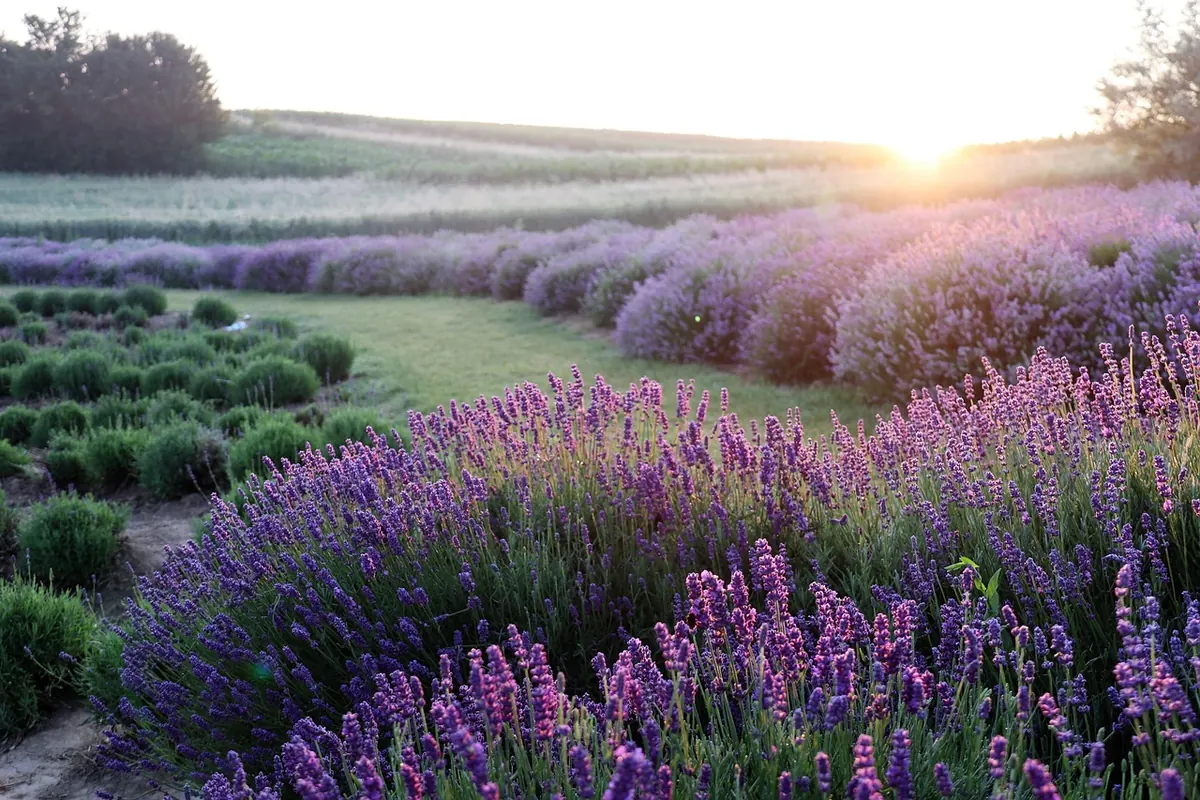
For sachets, fragrance matters more than the size of the bush. English lavender, Lavandula angustifolia, is the classic choice. It has the sweet, clean scent most people expect from a linen sachet, and cultivars such as ‘Hidcote’ and ‘Munstead’ are reliable garden plants. Pick a variety you can smell clearly on a warm afternoon; that is the one worth drying.
Lavandin, Lavandula x intermedia, is a larger, tougher plant with a stronger, more camphorous scent. It dries well and is useful for bulk sachets, but the fragrance can be sharper. Spanish and French lavenders are beautiful in the border, yet their scent is often less sweet and their flower spikes are less generous for cutting. If you inherited a mystery lavender bush, dry a small test batch before committing a whole harvest to sachets.
Use the buds, not the leaves. Leaves can add a green, slightly bitter note, and they crumble into dust in the sachet. Strip them away during preparation and keep the flower heads intact.
Harvest at the Scent Peak
Harvest on a dry morning after the dew has lifted but before the heat of the day. Wet flowers dry badly and can mold; hot flowers have already begun to lose their brightest oils. Choose a still, sunny morning and take a shallow basket rather than a plastic bag, which can trap moisture and crush the spikes.
The signal is in the flower spike. The lower buds should be swollen and just beginning to open, while the upper buds are still tight. If you wait until every flower is fully open, the spike looks lovely but the scent is already fading and the buds will shatter as they dry. For sachets, slightly early is better than slightly late.
Use sharp, clean pruners and cut stems about 20–30 cm long. Leave at least a third of the plant’s foliage and avoid cutting into old, woody stems. On a young plant, take only a light harvest in the first year or two so the bush has energy to establish. In warm climates you may get a second, lighter flush in late summer; in cooler gardens, one good June harvest is often the main event.
Bundle and Prepare for Drying
Work in shade or in a garage, not in full sun. Sort the stems as you go, removing damaged flower heads and stripping the lower leaves. Then make bundles that are no thicker than a small fist, usually about 15–25 stems. A tight bundle dries unevenly in the middle and is more likely to mold.
- Align the flower heads and gather the stems at the cut end.
- Secure each bundle with a rubber band or soft twine. Rubber bands are practical because they tighten as the stems shrink.
- Label the bundle with the variety and harvest date. A strip of masking tape on the string is enough.
- Hang the bundle upside down in a dark, airy place, or lay it loosely on a drying screen if space is short.
Hanging keeps the stems straight and makes a pretty kitchen bundle, but screens are better if you are drying many heads for sachets. Whichever method you choose, do not pile the bundles on top of one another. Air needs to move around every flower head.
Give It Dark, Dry, Moving Air
Lavender dries best in a dark, dry room with gentle airflow. A spare bedroom, a ventilated attic, a shed, or a cupboard with the door left ajar can all work. Avoid the kitchen, where steam and cooking smells settle into the buds, and avoid a bright windowsill, which fades color and scent. Direct sun is not a friend to dried lavender.
Hang bundles from a rod, a drying rack, or a line strung across the room. Leave space between them. If the weather is humid, run a small fan on low, not pointed directly at the flowers, to keep the air moving. In a very dusty place, slip each bundle into a paper bag with a few holes punched in the sides; the bag keeps dust off while the buds dry.
Check after about ten days. The stems should snap cleanly and the buds should feel crisp, not leathery. If the stems bend, give them more time. Do not speed the process with an oven or microwave; high heat can set a cooked, hay-like smell that no sachet deserves. If you see mold, discard that bundle and clean the area before drying the next one.
Strip, Sort, and Store the Buds
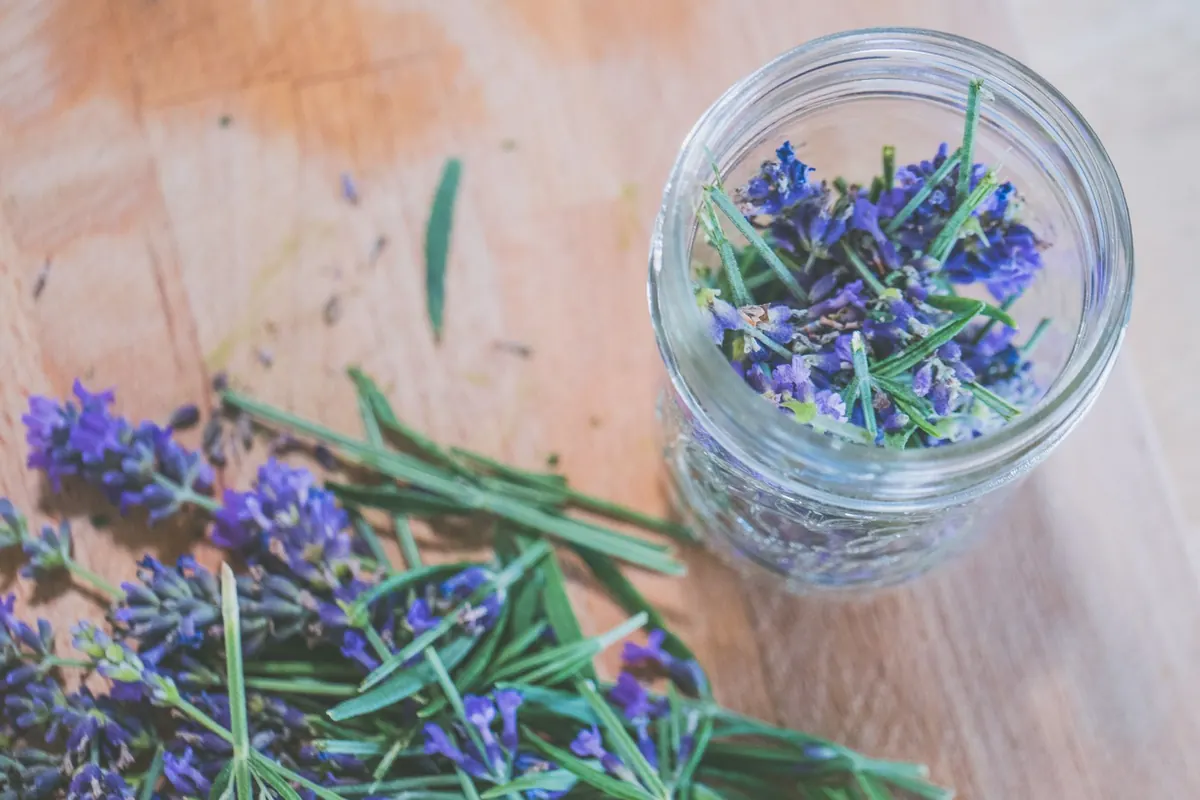
When the bundles are fully dry, rub the flower heads gently over a wide bowl. The buds should fall away from the stems. Work slowly and leave the buds whole; crushed buds release their scent quickly and then fade faster. Pick out leaves, stems, and any dusty bits, but do not grind the buds into powder.
Store the clean buds in glass jars with tight-fitting lids. Fill the jar to the shoulder, label it with the variety and date, and keep it in a dark, cool cupboard. Whole buds hold their fragrance much better than loose, crushed ones, so keep them intact until you are ready to sew. Avoid long-term storage in plastic bags, which can hold stale odors and let fragrance escape.
If you live in a humid climate, make sure the buds are truly crisp before sealing the jar. A food-safe desiccant packet kept away from direct contact with the buds can help in a damp cupboard, but it is not a substitute for proper drying. Let the jar cool to room temperature before lidding if you have been drying near a warm spot.
Make a Sachet That Keeps Its Scent
Choose a breathable fabric: cotton, linen, or muslin. A tight weave keeps fine dust inside, while a looser weave lets the fragrance reach the drawer. For delicate linens, make an inner pouch of muslin and a prettier outer cover. Fill the sachet about two-thirds full with buds, leaving room to sew the opening closed without compressing the contents.
Small sachets, roughly 7–10 cm square, are useful in drawers and shoe boxes. Larger ones suit a linen cupboard or a guest-room wardrobe. Place them where air can move around them, and squeeze gently now and then to release a fresh wave of scent. Keep them dry; a damp bathroom is the wrong home for a lavender sachet.
Replace sachets when the scent becomes faint, usually after a season or two of steady use. Keep them out of reach of children and pets, and never treat them as food or medicine. If you want to refresh a fading sachet, a single drop of lavender essential oil on a cotton ball tucked into an outer pocket can lift the scent, but keep the oil off the fabric itself and away from pets and small children.
A Small Harvest, Well Kept
Begin with one bundle this year. Cut it on a dry morning, dry it slowly in the dark, and store the buds whole in a labeled jar. That small test tells you more than any general rule: how your variety performs, how quickly your climate dries flowers, and how long the scent lasts in your own drawers. A modest harvest, handled well, will fill more sachets than you expect.
Photo: Couleur / Pixabay